

Something unusual happened on stage 4 of the Tour de France. Tim Wellens, one of Tadej Pogačar's key assistants, unexpectedly broke away from the group to take a point on a relatively small climb, aiming to claim the polka dot jersey for best climber from his teammate Pogačar at the end of the day.
It was a surprising move, as Wellens is not usually the type to aim for the jersey, but there was more at stake here than first met the eye. After the stage, after endless media interviews and a drawn-out podium ceremony, Wellens explained: "Our only goal is the yellow jersey in Paris."
Wellens said it wasn't disrespect for the polka dot jersey, but rather that it wasn't a real goal for Pogačar, so priorities had to be set. "Tadej also likes the leader's jersey, but the truth is that rest is Tadej's priority in the Tour," Wellens said.
Plus, there was the fact that Pogačar had a chance to win the next day and do so in the world champion's rainbow jersey, in case he lost the polka dot jersey - which is exactly what happened.
As a stand-alone event, it’s interesting, especially since for many riders, such a jersey would be the highlight of their tour. But it wasn’t an isolated incident. After the inevitable reshuffle on stage 5’s flat pace, Pogačar was back in the yellow jersey on stage 6, 42 seconds ahead of his nearest rival. But it seemed like he couldn’t wait to hand it over to someone else.
After the time trial, he already seemed to be encouraging the inevitable departure the next day: "I don't know what could happen tomorrow. Maybe it's the day of departure and they can take the yellow jersey too," Pogačar said before stage 6.
The culmination of this trend came on a hot day in Normandy, when Ben Healy took his first stage win of the Tour. At the same time, a mental chess game was taking place five minutes behind, as Jonas Vingegaard, Pogačar's main rival for the overall victory, put his team to work in the final 30km to close the gap to the breakaway. This, although it seems counterintuitive at first glance, was to keep the leader's jersey on the favourite.
UAE Team Emirates-XRG had been quietly building a lead all day, more than six minutes, clearly ready to give up the lead. But when Visma realised that the gap could remain small, they saw an opportunity to stop UAE from getting rid of it.
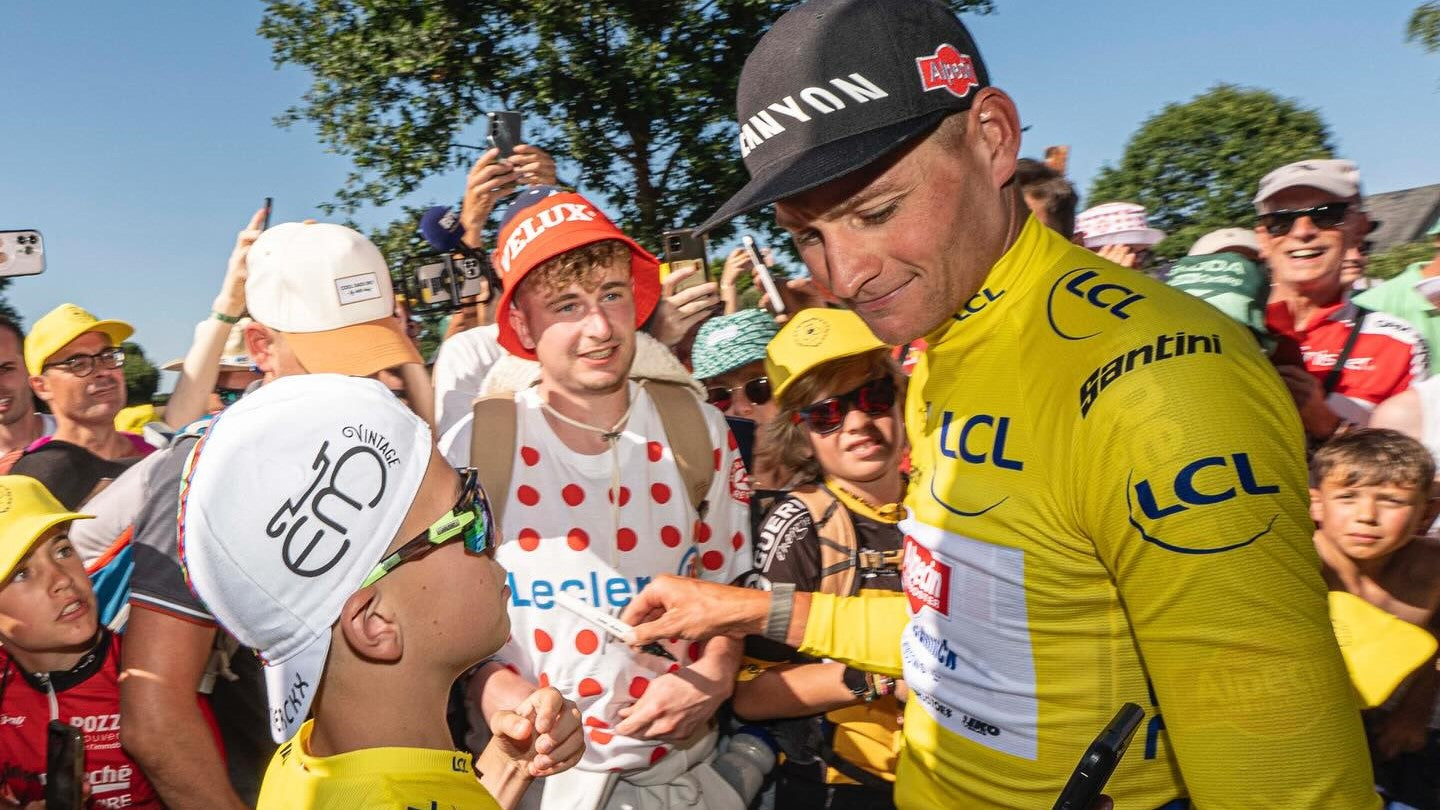
In the end, it all came down to a single second: Pogačar lost the leader's jersey to Dutchman Mathieu van der Poel, despite the efforts of Vingegaard and his Visma team. These unusual tactics also drew the ire of a clearly frustrated Pogačar. At the end of the stage, the Slovenian remarked: "Visma tried to do... I don't know what. They went all out, so we just followed them," dismissing the idea that he was trying to chase the yellow jersey - quite the opposite.
So why are the biggest riders in this year's Tour actively trying to avoid the lead, and why are their rivals trying to prevent them from getting rid of it?
Cycling, especially the Tour de France, is a game of small victories. It is the most stressful race of the year for any competitor, as the stakes are high and the media attention is immense. After a long, hot day in the saddle, the stage winner and the leader of each classification must endure a grueling round of interviews, podium ceremonies and autograph signings that delay much-needed recovery and rest.
Recovery has become almost as important in cycling as the training itself. Post-stage rice meals, cherry juice, massages, ice baths and compression shorts have become standard routines – and only a few of them are compatible with the media circus schedule.
Additionally, there are unwritten rules in cycling that require the leader and his team to control the race before the action really starts. This means extra stress and effort for a team whose goal is not to be the leader, but to win the tour at the end.
While for many riders, spending even one day in the yellow jersey is the highlight of their lives, for the few who have a real chance of taking overall victory, it is a burden they want to carry as late and as little as possible.
In a sport where every little thing counts, avoiding these obligations – or burdening them on your rival – has become a strategic part of the game. We've already seen the first moves of this game in the first week of the Tour, so don't be surprised if this competition within the competition continues throughout the Tour.


